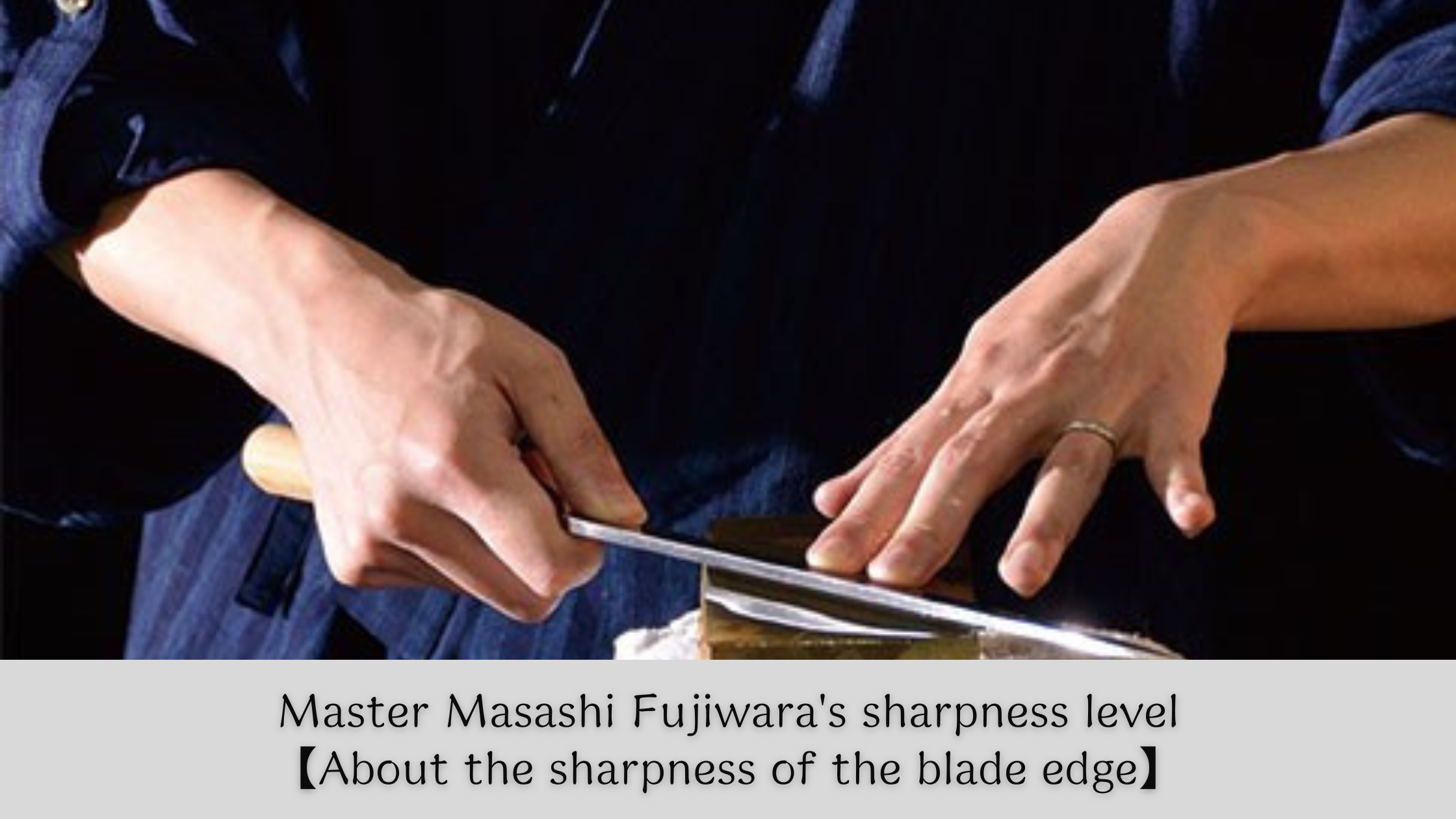
In YouTube videos, Master Fujiwara often uses the terms “sharp edge” and “rounded edge.” We feel that the fact that the criteria for “sharp” and “rounded” are actually about a microscopic unit—a single particle—is not quite being conveyed to the viewers.
In reality, since this is an area that 99% of people cannot reach, it is also a fact that it is extremely difficult to intuitively understand it and incorporate it into one’s thinking. As a result, there are many instances where the points of contention do not align with those who leave comments, or where a discussion is not being established.
We have no intention of criticizing others or pushing our own claims. This article is written from an impartial standpoint based on facts, and we do not deny anyone or excessively praise Master Fujiwara.
However, in order to share a discussion at this stage and establish a dialogue, we believe it is necessary to at least understand these points.
We have mentioned this beforehand because, without this notice, it could lead to criticisms that differ from the main point, such as “that kind of sharpness is useless.”
We believe that if you keep in mind that “discussion,” not “criticism,” is what is important, we can move in a good direction for each other.
“Sharp edge” “Rounded edge”
When hearing about the blade edge or sharpness of a knife, many people likely imagine a diagram like this.
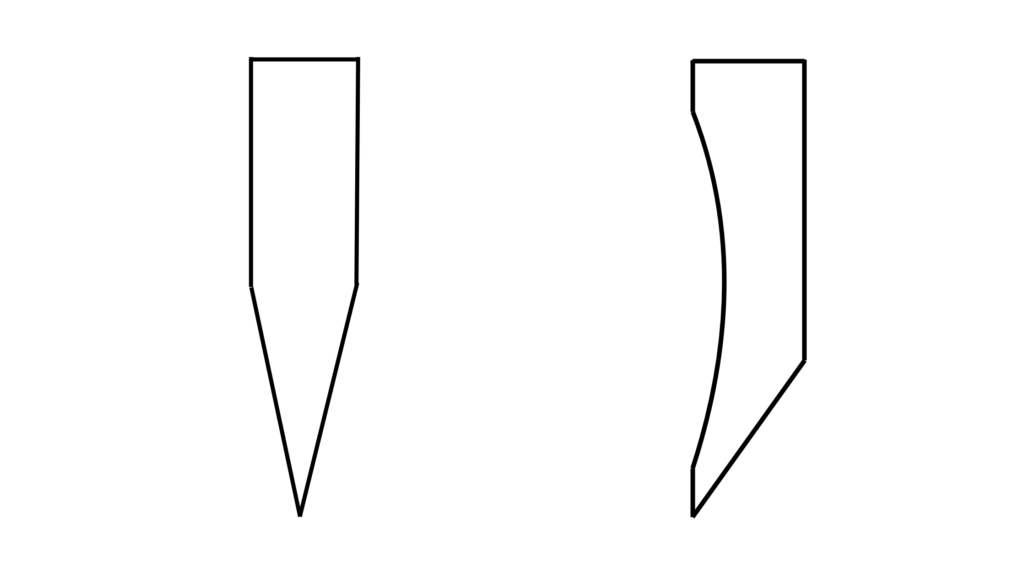
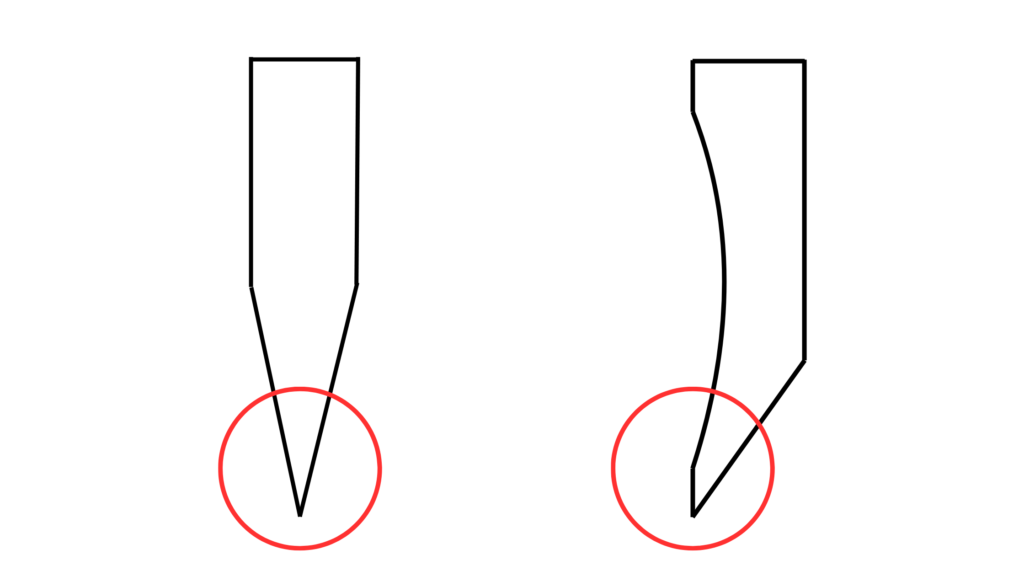
Generally, when people say “the blade edge is sharp or rounded,” many imagine a state within the range that can be understood by touching with a finger or seeing with the eyes.
However, the “sharp/rounded” that we define is not about the shape of the knife itself, but about the invisible realm of the blade edge.
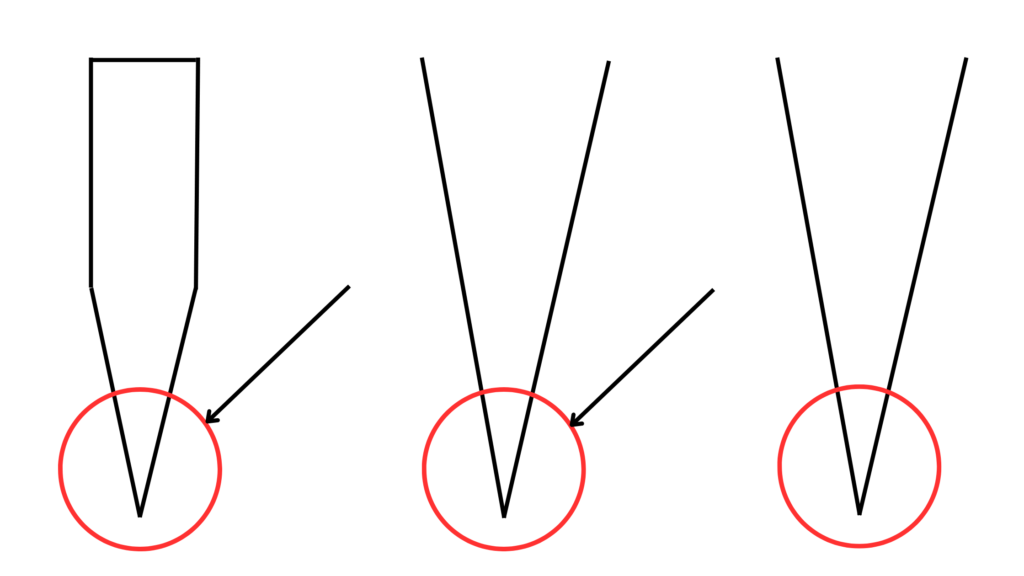
It is a world with the feeling of taking a normal diagram of a blade edge, magnifying it, and then magnifying it even further.
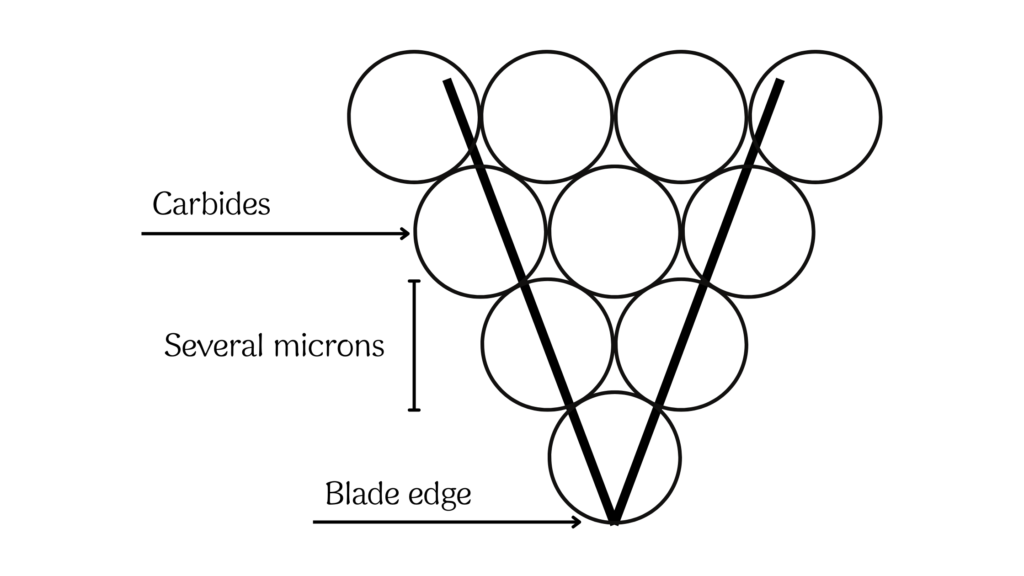
The shape of the carbides is strictly an image, but the size is on a scale of several microns to tens of microns.
In that microscopic world, we are talking about whether the blade edge is sharp or rounded.
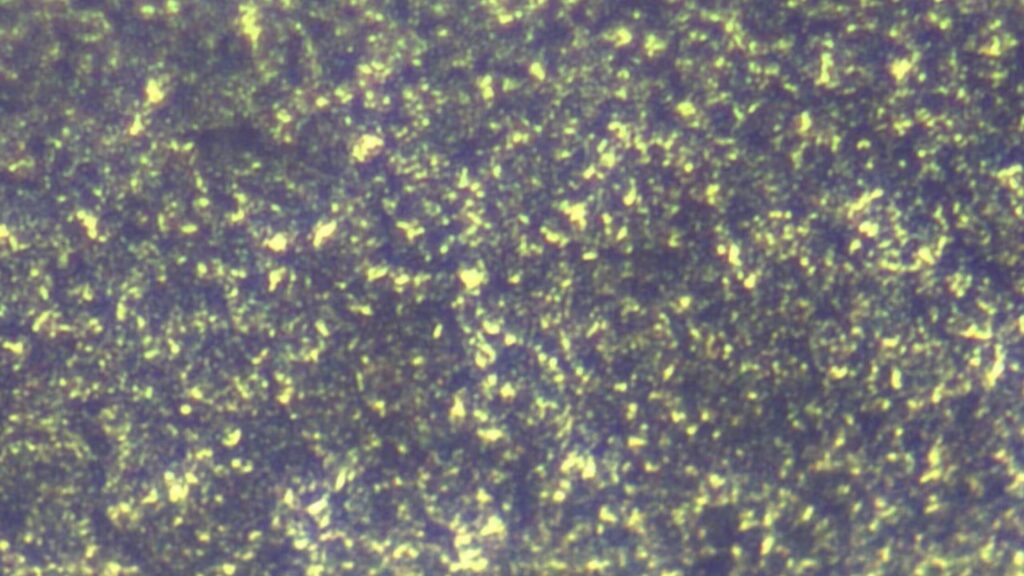
This is a microscopic photograph of Master Fujiwara’s new steel material, “T3.”
These small, pebble-like objects are the carbides. They are extremely fine compared to major steel materials such as VG10 or Silver 3, but the key is how to utilize these carbides to create the blade edge.
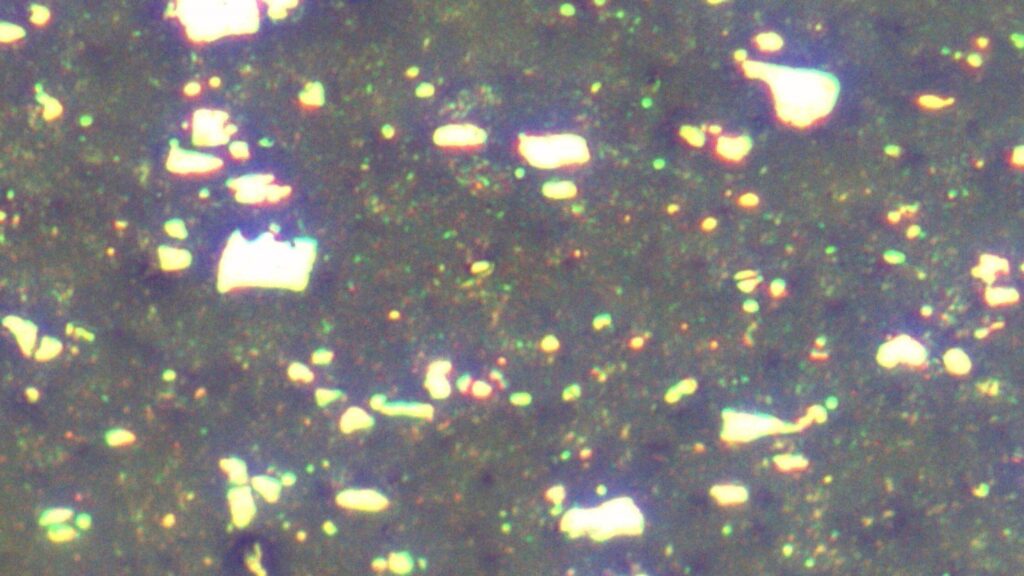
This is a microscopic photograph of “Silver 3”
Even if the logic is understood, if the particles of the steel itself are large and inconsistent, it becomes difficult to even form that blade edge in the first place. In that sense, the story of the blade edge has already begun from the making of the knife.
In reality, as to whether such sharpening is practical, it cannot be said for certain because it cannot be handled properly unless the skills of the chef using it are also first-class. However, if you understand that we are discussing things with such a realm as a premise, you should be able to enjoy it as a form of entertainment.
Considering various conditions, it must be said that imitating it is difficult. However, whether or not you have this perspective, the way of facing sharpening and the resolution will be completely different.