In this article, we will provide a clear explanation of the types and uses of Western knives, as well as the names of their various parts.
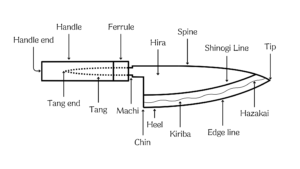
What is a Western Knife?
Western knives were introduced to Japan and became widespread alongside the changes in food culture from the Meiji era onward.
In the past, the Japanese diet centered on fish and vegetables, so knives like the Nakiri (vegetable knife) were primarily used. However, as meat consumption became more common, the shapes of knives evolved.
Starting with the Gyuto (chef’s knife) imported from the West, Western knives in Japan have undergone a unique development. This includes the creation of the Santoku (multipurpose knife)—designed to handle meat, fish, and vegetables—to meet the needs of Japanese households.
Characteristics of Western Knives
Blade Shape
Western knives generally feature a “double-edged” (ryoba) design, where both sides of the blade are angled. Because pressure is applied evenly to both sides, the blade can be lowered straight into the food, making it ideal for cutting through ingredients quickly and accurately.
Handle Structure
The overall structure typically employs a “riveted” design, where the part of the blade that extends into the handle (the tang) is sandwiched between handle materials and secured with rivets. This structure is extremely robust and durable, and is characterized by its resistance to becoming loose or rattling.
Names of the Parts of a Western Knife
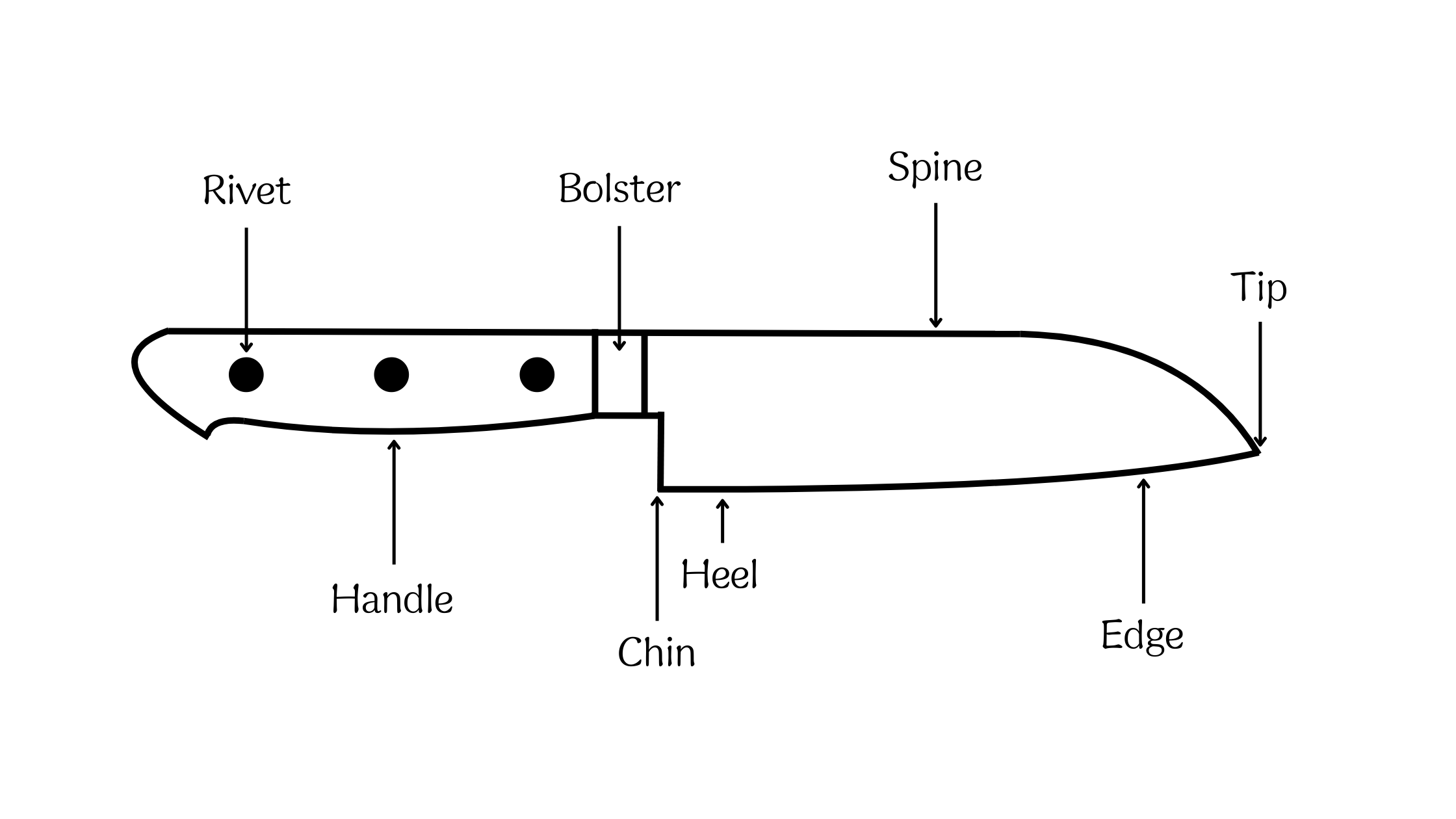
The basic shape of a knife consists of the “blade” for cutting and the “handle” for gripping.
There are differences between Japanese knives and Western knives in terms of their shapes and the names used for each part.
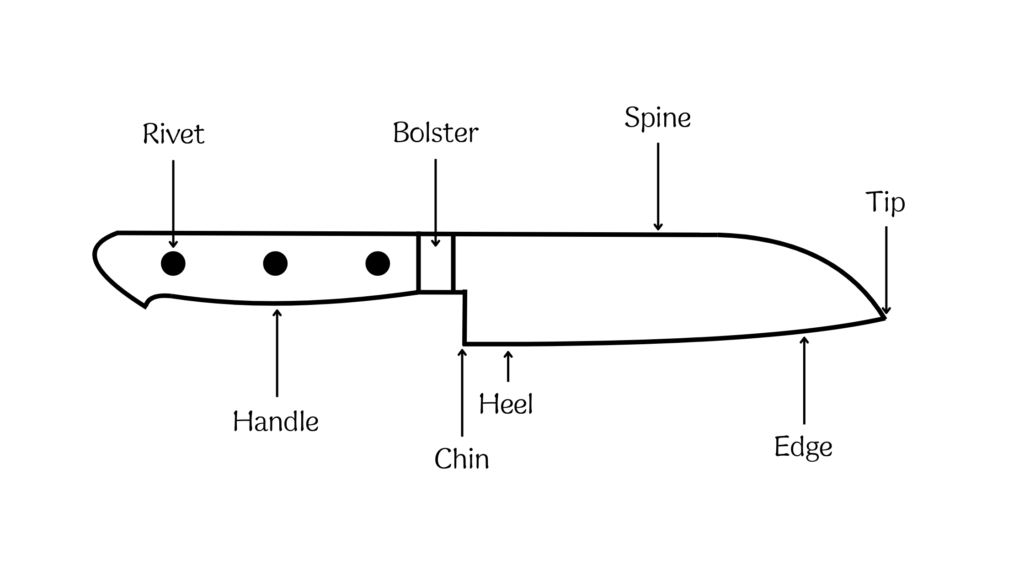
Tip┆切先┆きっさき┆kissaki
Edge┆刃先(刃線)┆はさき(はせん)┆hasaki (hasen)
Spine┆峰┆みね┆mine
Heel┆刃元┆はもと┆hamoto
Chin┆顎┆あご┆ago
Bolster┆鍔┆つば┆tsuba
Handle┆柄┆え┆e
Rivet┆鋲┆びょう┆byo
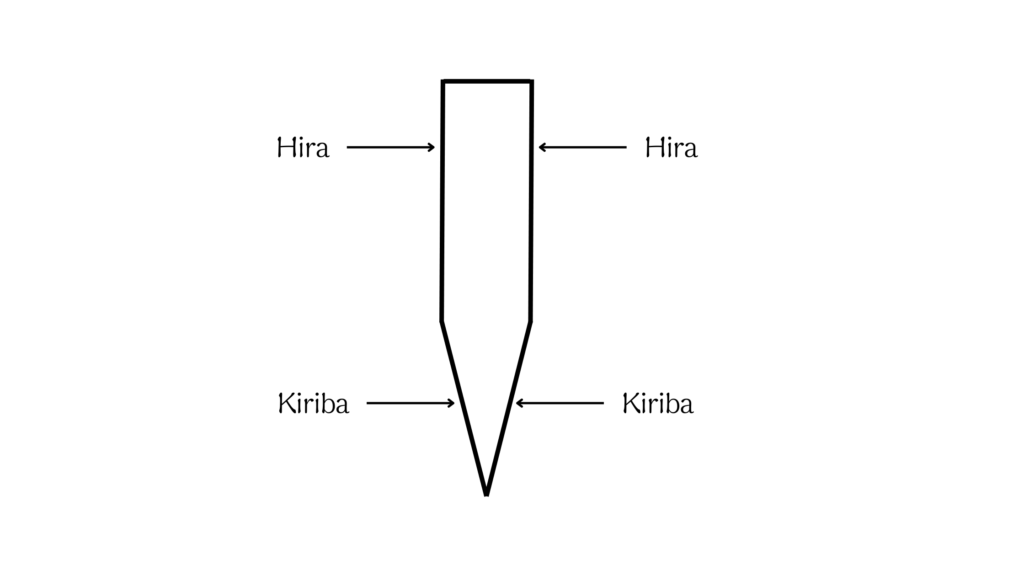
Hira┆平┆ひら┆hira
Kiriba┆切刃┆きりば┆kiriba
Types of Western Knives
・Paring Knife
・Petty Knife
・Santoku Knife
・Nakiri Knife
・Bunka Knife
・Gyuto (Chef Knife)
・Sujihiki (Slicer)
・Steak Knife
・Honesuki (Boning Knife)
・Yo-Deba (Western Deba)
・Hone-kiri (Chopper)
・Sole Knife
・Salmon Slicer
・Bread Knife
While the Santoku, Nakiri, and Bunka are originally Japanese knives, they are often double-edged and similar in construction to Western knives. Because they are commonly marketed as Western-style knives, we will introduce them here alongside Western knives.
Paring Knife
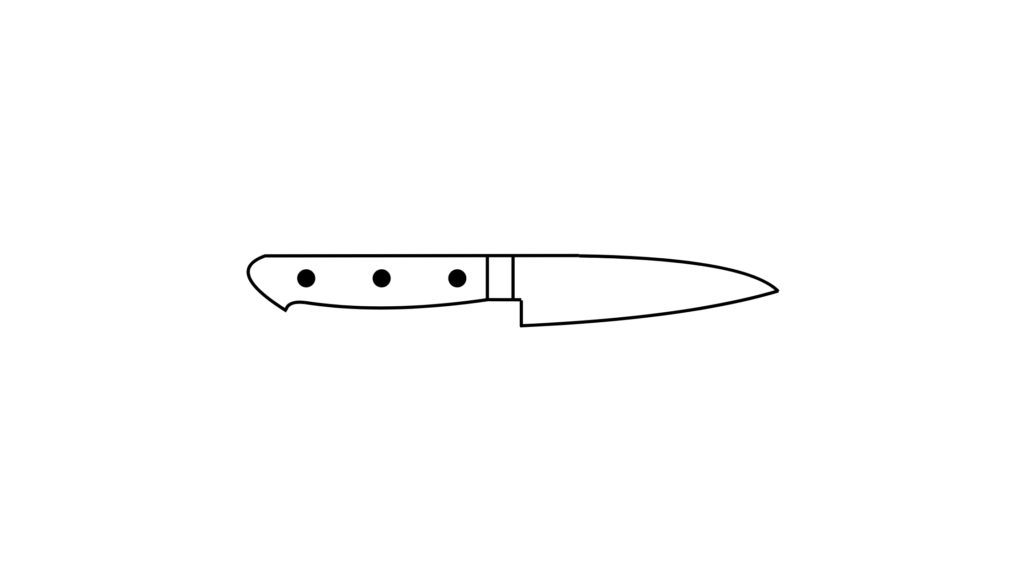
【Purpose】
This knife is specialized for detailed tasks performed while holding the ingredient in your hand, such as peeling fruits and vegetables, removing seeds, and decorative carving. It is also commonly used in households abroad.
【Blade Length】
Approximately 60mm to 100mm
Petty Knife
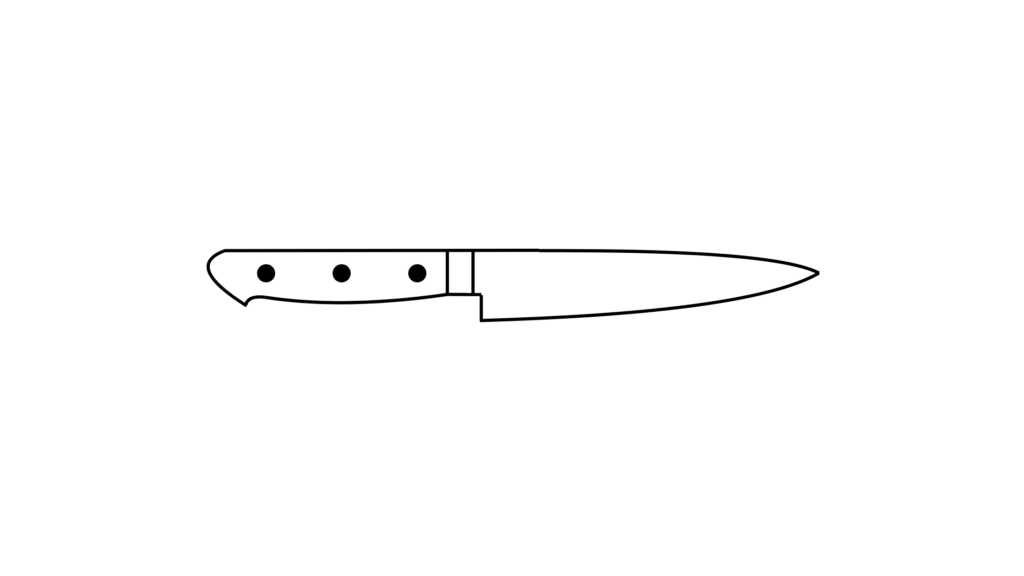
【Purpose】
This knife is suitable for peeling and cutting fruits and vegetables, as well as small-scale tasks that are difficult to handle with a large knife. Among Western knives, it is the most commonly used knife after the Gyuto (Chef’s Knife).
【Blade Length】
Approximately 90mm to 160mm
Santoku Knife
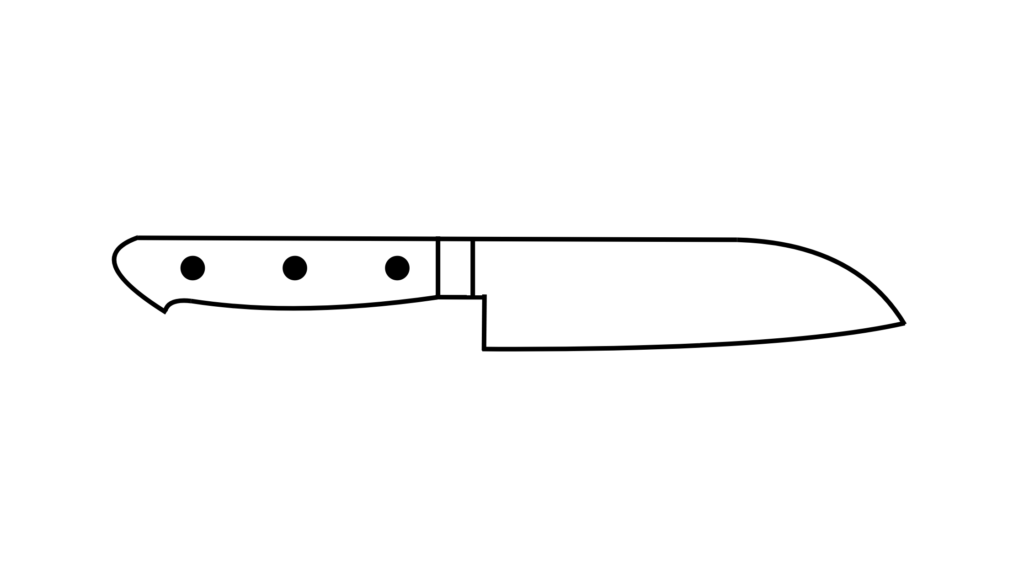
【Purpose】
The name comes from the fact that it can handle three types of ingredients—meat, fish, and vegetables—broadly. It is the most commonly used multipurpose knife in Japanese households.
【Blade Length】
Approximately 150mm to 180mm
Nakiri Knife
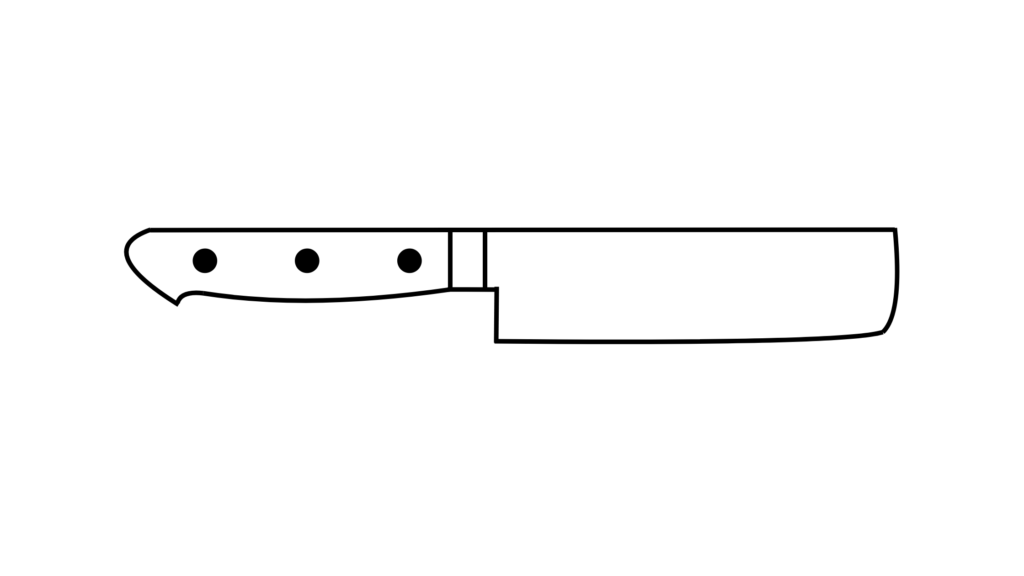
【Purpose】
This knife is specialized for cutting vegetables and is characterized by its straight blade and wide width. It can be used for tasks such as shredding cabbage or creating thin sheets of radish (katsuramuki).
【Blade Length】
Approximately 150mm to 170mm
Bunka Knife
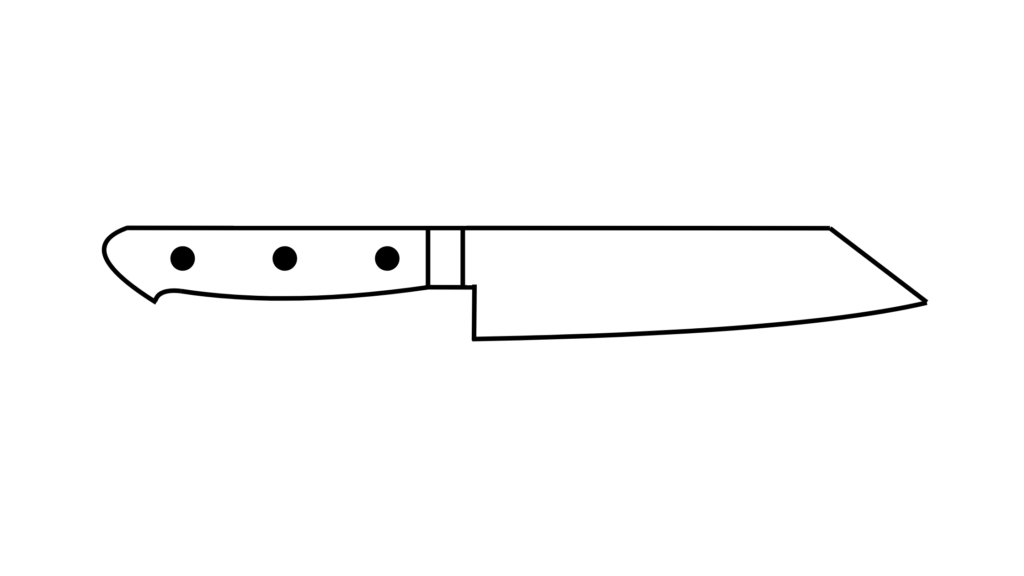
【Purpose】
Like the Santoku, it is a multipurpose knife that can handle a wide range of ingredients including meat, fish, and vegetables. It is characterized by its shape, which looks like a Gyuto with the tip cut off at an angle.
【Blade Length】
Approximately 150mm to 240mm
Gyuto (Chef Knife)
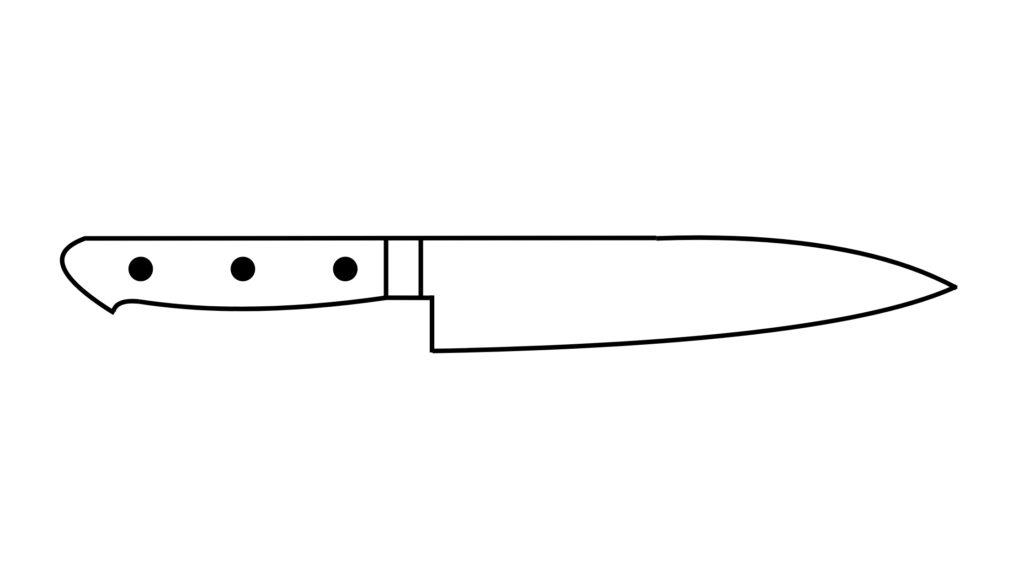
【Purpose】
Although originally created for carving meat, it is now widely used as a multipurpose knife for meat, fish, and vegetables. Compared to the Santoku, it has a longer blade and a sharper tip, making it suitable for cutting large ingredients, draw-cutting, and detailed work.
【Blade Length】
Approximately 180mm to 360mm
Sujihiki (Slicer)
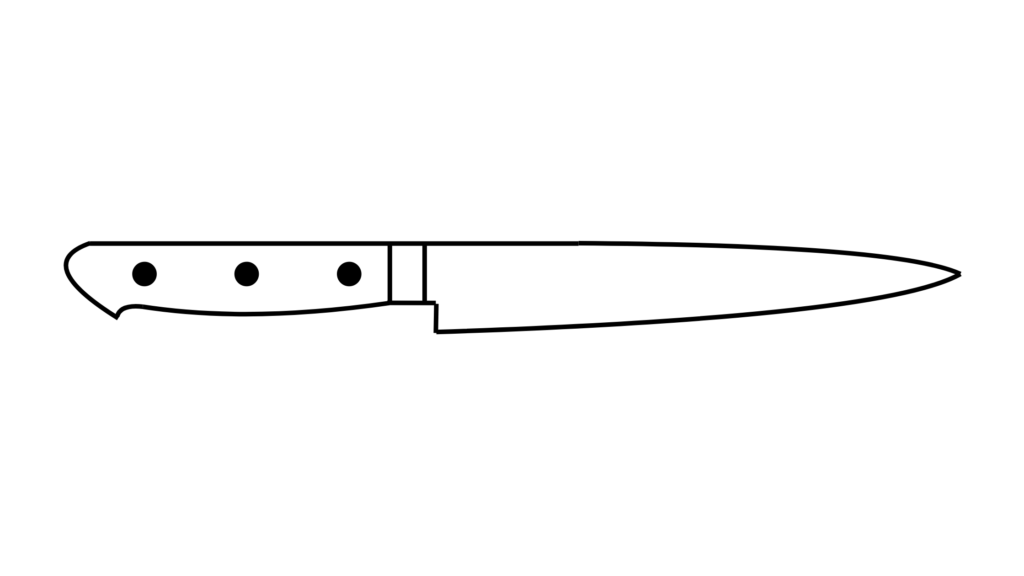
【Purpose】
This knife is suitable for separating portions from large cuts of meat or slicing meat thinly. Compared to the Gyuto, the blade is narrower, reducing friction with the ingredients and allowing for beautiful slices using a draw-cut.
【Blade Length】
Approximately 210mm to 300mm
Steak Knife
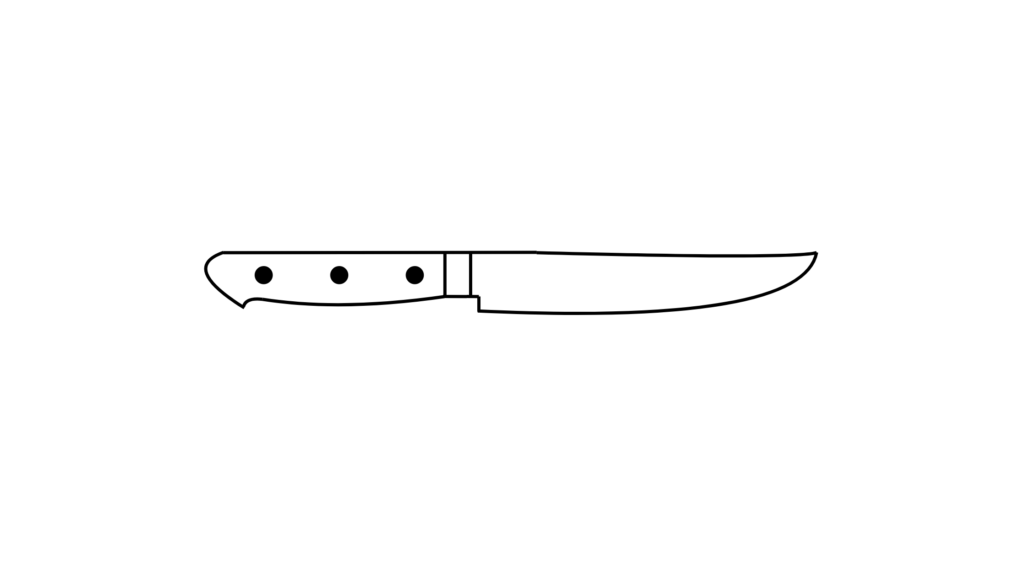
【Purpose】
This is a tabletop knife used for carving cooked steaks, hamburgers, and other dishes directly on the plate. To smoothly cut through tough meat fibers, some have serrated edges at the tip, while others have sharp straight edges.
【Blade Length】
Approximately 110mm to 140mm
Honesuki (Boning Knife)
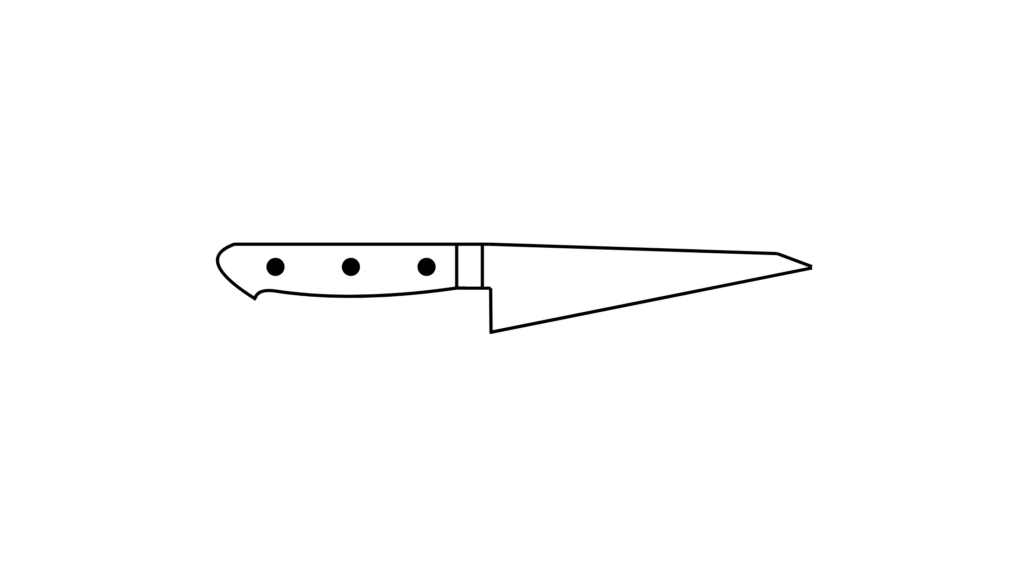
【Purpose】
This knife was created for separating meat from the bone. The sharp tip makes it ideal for scraping meat from gaps and disconnecting joints.
【Blade Length】
Approximately 130mm to 160mm
Yo-Deba (Western Deba)
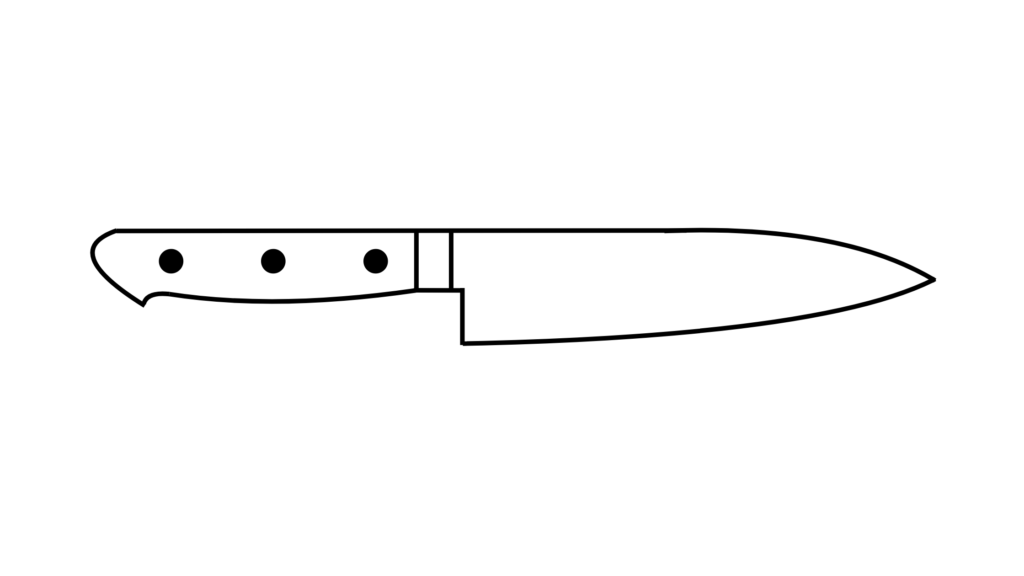
【Purpose】
This knife is suitable for tasks that require power, such as filleting fish, cracking hard shells like crab, or cutting through bones. Compared to a standard Gyuto, it is characterized by its thicker and heavier blade construction.
【Blade Length】
Approximately 210mm to 270mm
Hone-kiri (Chopper)
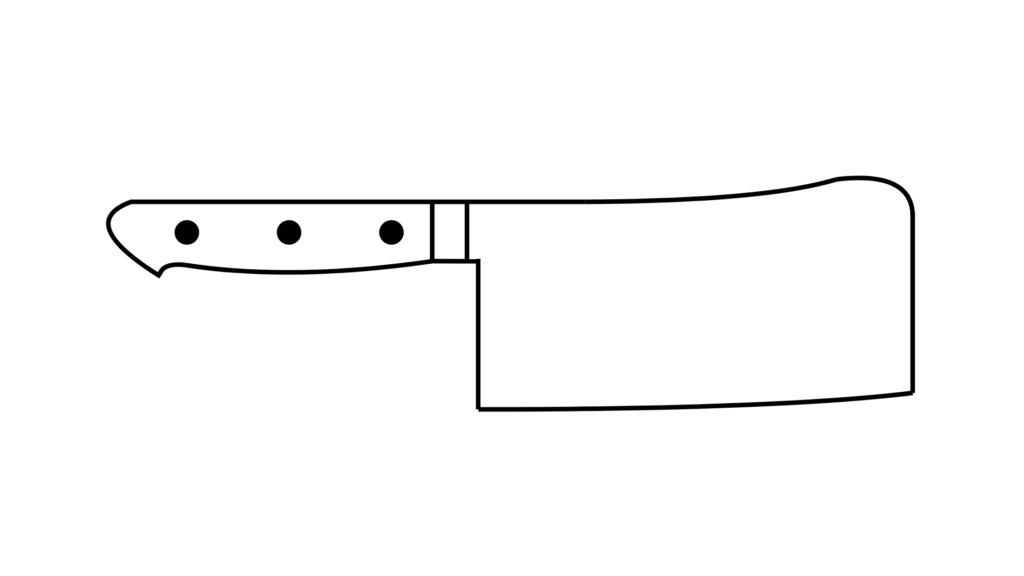
【Purpose】
Characterized by its wide, extremely thick, and heavy blade. Utilizing its weight, it is suitable for chopping through large cuts of meat on the bone or frozen meat. It has a sturdy build that allows for powerful use without fear of chipping the blade, and in the West, it is also called a chopper.
【Blade Length】
Approximately 150mm to 220mm
Sole Knife
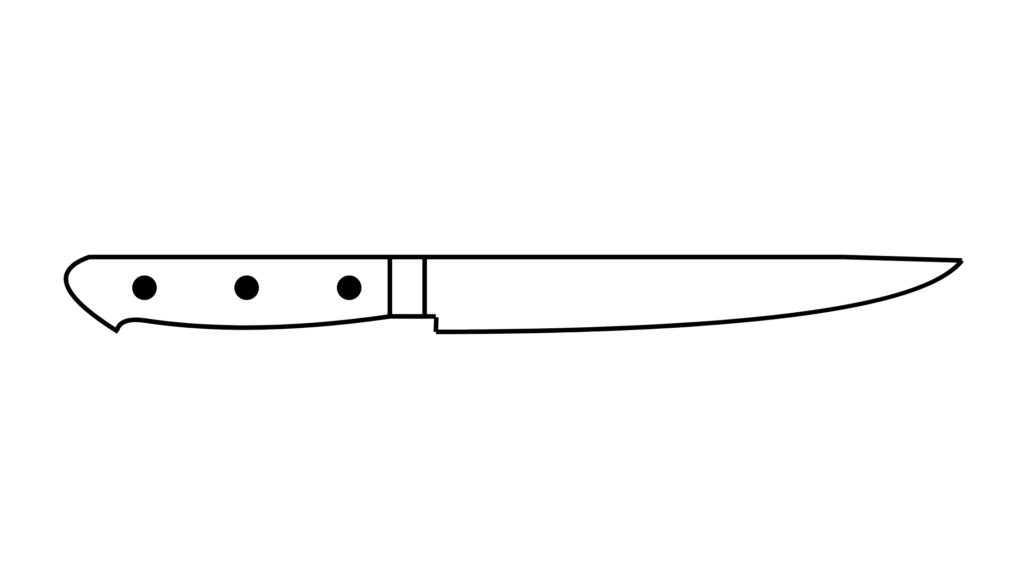
【Purpose】
This knife was created primarily for filleting fish such as Dover sole into three pieces and for skinning. It is characterized by an extremely thin and flexible blade that can bend, allowing the knife to move along the shape of the bones to cleanly cut away the flesh.
【Blade Length】
Approximately 200mm to 250mm
Salmon Slicer
【Purpose】
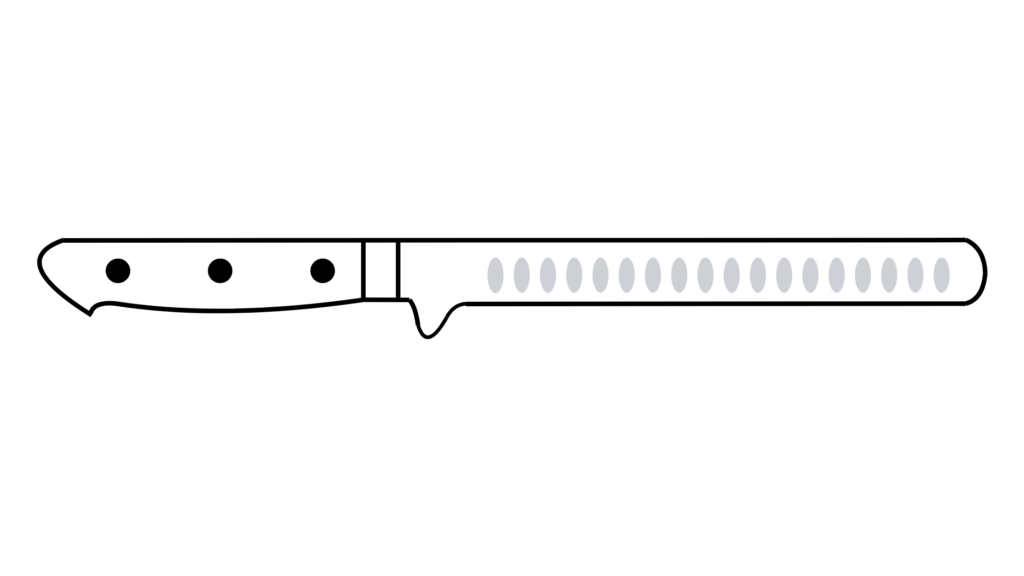
This knife is specialized for slicing large fish such as salmon into thin, uniform pieces. It has a long blade, often featuring “dimples” (indentations) to prevent sticking, allowing fatty flesh to be sliced beautifully without tearing.
【Blade Length】
Approximately 300mm to 360mm
Bread Knife
【Purpose】
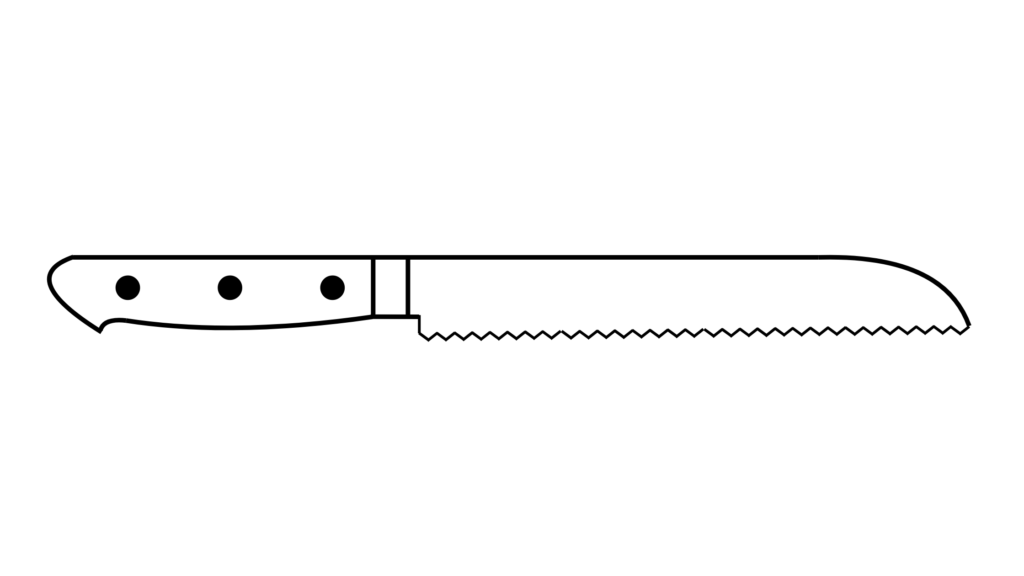
This knife was created to cut bread without ruining its shape. It is characterized by its serrated edge, which grips the hard crust of French bread effectively and allows soft bread to be sliced cleanly without crushing it.
【Blade Length】
Approximately 200mm to 350mm